
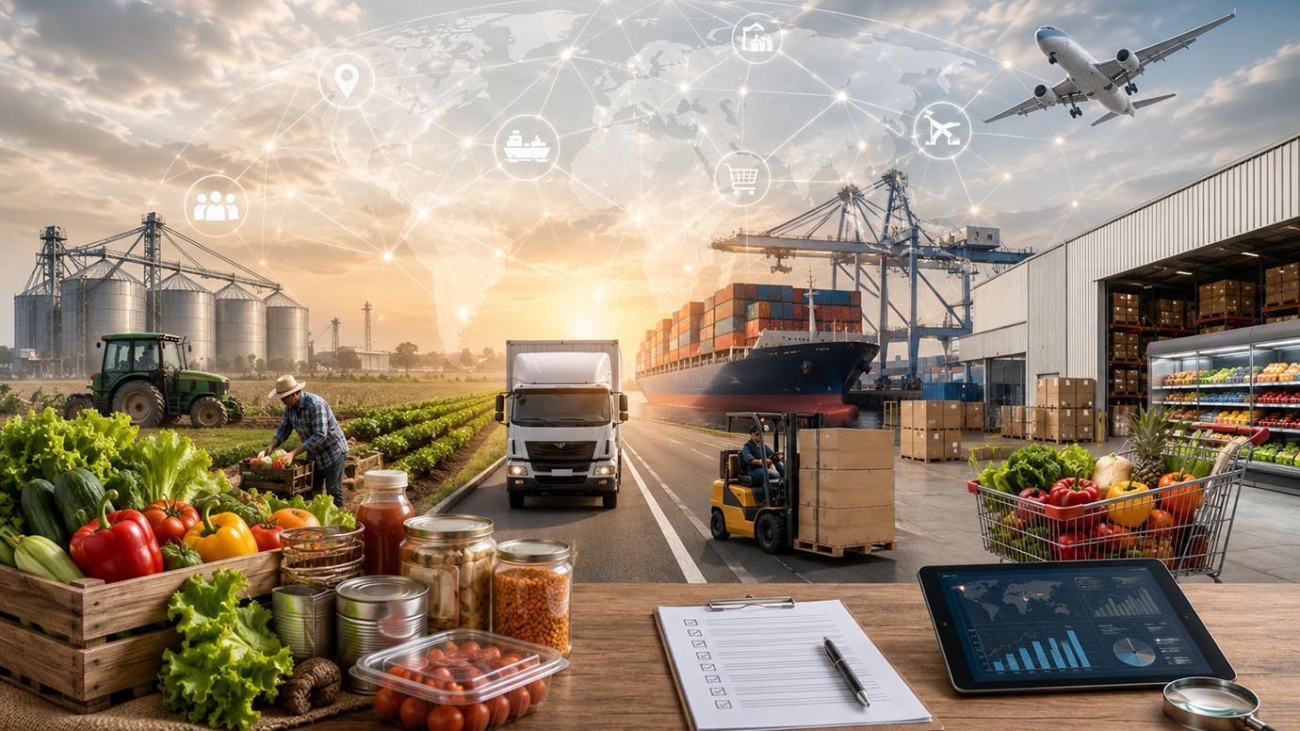
The food industry relies on a complex supply chain that connects producers, manufacturers, distributors, and consumers across the globe. While an efficient supply chain ensures product availability, quality, and customer satisfaction, disruptions can significantly impact business operations and profitability.
As consumer expectations continue to grow and markets become increasingly interconnected, food businesses must proactively address supply chain challenges to remain competitive. Understanding these challenges and implementing effective solutions can help organizations build resilience and achieve long-term success.
Understanding the Food Supply Chain
A food supply chain encompasses every stage involved in delivering food products to the end consumer. This includes sourcing raw materials, manufacturing, packaging, storage, transportation, distribution, and retail delivery.
Since multiple stakeholders are involved, even a minor disruption in one stage can affect the entire supply chain. This makes supply chain management a critical component of any food business.
Challenge 1: Supply Chain Disruptions
Global events, natural disasters, transportation delays, and geopolitical issues can interrupt the flow of goods and materials. Such disruptions may lead to shortages, delayed deliveries, and increased costs.
Solution:
Businesses should diversify their supplier base and establish partnerships across multiple regions. Having alternative sourcing options helps reduce dependency on a single supplier and ensures continuity during unforeseen circumstances.
Challenge 2: Maintaining Consistent Product Quality
Consistency is essential in the food industry. Variations in ingredient quality, manufacturing processes, or storage conditions can impact product performance and customer satisfaction.
Solution:
Implement rigorous quality assurance measures throughout the supply chain. Regular supplier evaluations, product testing, and standardized procedures help maintain consistent quality across every batch.
Challenge 3: Rising Transportation Costs
Fuel price fluctuations, logistics challenges, and increasing operational expenses can significantly impact transportation costs, affecting overall profitability.
Solution:
Optimize logistics planning through efficient route management, strategic warehousing, and reliable transportation partnerships. Leveraging technology can also help improve visibility and reduce unnecessary expenses.
Challenge 4: Inventory Management Issues
Both excess inventory and stock shortages can create operational challenges. Overstocking increases storage costs and waste, while understocking can lead to missed sales opportunities and customer dissatisfaction.
Solution:
Use data-driven forecasting and inventory management systems to accurately predict demand. Maintaining optimal inventory levels improves efficiency and reduces unnecessary costs.
Challenge 5: Food Safety and Regulatory Compliance
Food businesses must comply with strict safety standards and regulations. Failure to meet these requirements can result in recalls, penalties, and reputational damage.
Solution:
Develop comprehensive food safety programs and ensure suppliers meet required certifications and quality standards. Regular audits and compliance monitoring help minimize risks.
Challenge 6: Changing Consumer Preferences
Consumer demands evolve rapidly, with growing interest in healthier options, sustainable products, and international flavors. Businesses that fail to adapt may struggle to remain relevant.
Solution:
Stay informed about market trends and maintain flexible sourcing strategies. Working with global suppliers allows businesses to quickly respond to changing consumer expectations and emerging opportunities.
Challenge 7: Limited Supply Chain Visibility
Lack of transparency can make it difficult to identify delays, quality concerns, or operational inefficiencies within the supply chain.
Solution:
Invest in supply chain technology that provides real-time tracking and monitoring. Enhanced visibility improves decision-making, reduces risks, and strengthens overall operational performance.
Building a Resilient Food Supply Chain
The most successful food businesses are those that view supply chain management as a strategic advantage rather than a logistical necessity. Building resilience requires strong supplier relationships, robust quality systems, advanced planning, and continuous improvement.
Organizations that invest in supply chain optimization are better equipped to handle disruptions, maintain product quality, and meet customer expectations.
How Orenda Foods Supports Supply Chain Excellence
At Orenda Foods, we understand the importance of consistency, reliability, and operational efficiency. Through our global sourcing network, quality-focused manufacturing processes, and dependable logistics capabilities, we help businesses overcome supply chain challenges and achieve seamless food operations.
Our commitment to quality and precision ensures that clients receive the products they need, when they need them, without compromising standards.
Conclusion
Food supply chain challenges are inevitable, but they can be effectively managed with the right strategies and partnerships. By diversifying sourcing networks, strengthening quality control, improving visibility, and embracing innovation, businesses can build resilient supply chains that support sustainable growth.
In an increasingly competitive food industry, a strong supply chain is not just an operational requirement—it is a key driver of long-term success.